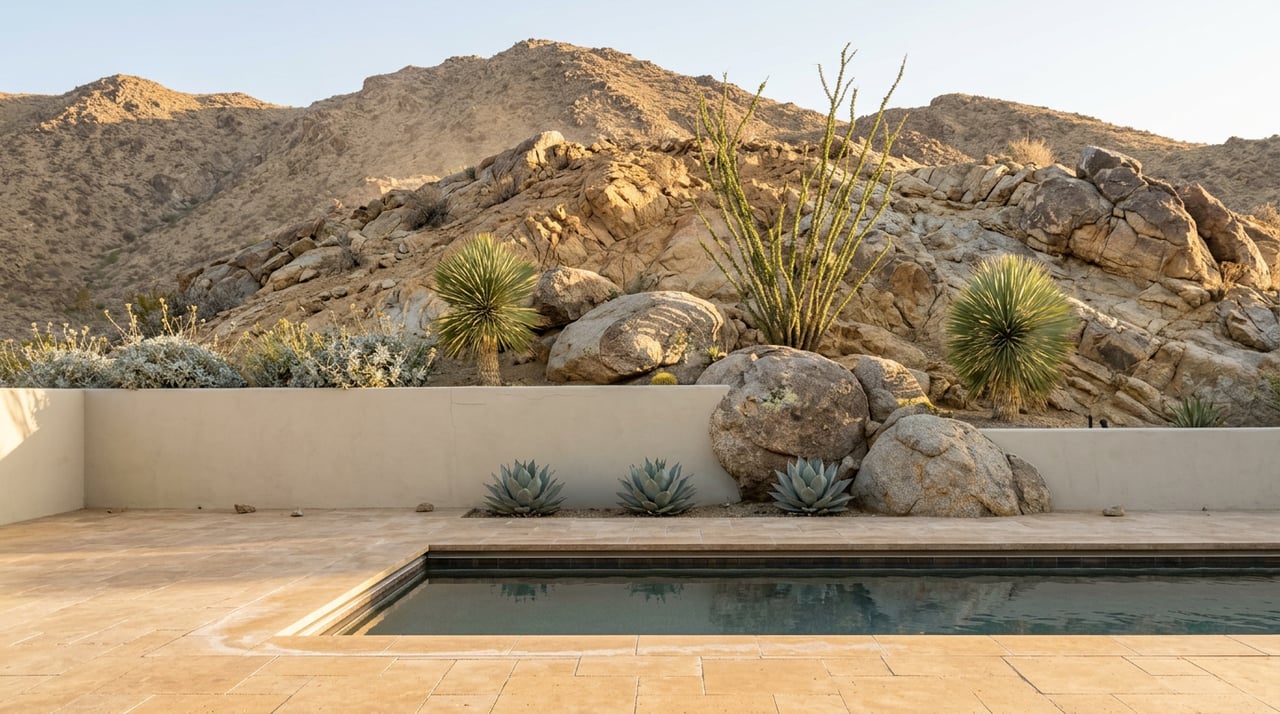
It's the middle of August, the sidewalks along Frank Sinatra Drive are empty by nine in the morning, and the mountains rising behind Thunderbird Heights look exactly like what most people assume they are this time of year: dormant. The heat has driven everyone indoors, the trailheads sit quiet, and the general wisdom is to wait for October before thinking about those foothills again.
That assumption is wrong, and the biology behind it is worth knowing if you live inside these gates.
The Count Nobody Sees
Every July, biologists from the Bighorn Institute head into the northern Santa Rosa Mountains that back up against Rancho Mirage to conduct an annual waterhole count of the Peninsular bighorn sheep that live there. They do it in the worst part of the summer on purpose. Bighorn sheep can go up to three days in triple-digit heat without drinking, so the only reliable way to count them is to catch them when thirst finally forces them to a water source. This year's count, conducted over two days in early July with highs around 109 degrees, turned up 65 sheep, including 18 lambs, and supports the institute's current estimate of roughly 140 adult bighorn living in that range.
The institute's own field notes described the conditions as "perfect for making thirsty sheep." That is not a coincidence of scheduling. It is the method. The hottest, most abandoned-feeling stretch of summer is the exact window when the animals living in the hills above Thunderbird Heights are easiest to find, because the heat itself pushes them into view.
Rut Season Started Before You Noticed
The second piece of this runs even longer. The breeding season, or rut, for Peninsular bighorn sheep typically extends from July through November. As of this year's July field update, rams were already pursuing ewes across the range, and the institute noted the rut was in full swing. During this stretch, rams can lose up to a quarter of their body weight traveling long distances in search of mates, sometimes crossing between ranges entirely.
That means the four-month window most residents would guess starts sometime in the fall actually began weeks ago and has already been running through the hottest part of the year. If a neighbor tells you nothing happens in these hills until the weather breaks, the sheep disagree. Lambing season, which typically runs January through June, wrapped up before the rut began, so the animals moving through the range right now are the rams and ewes of the current breeding cycle, not this year's lambs.
The Trail System Right Off Frank Sinatra Drive
None of this is happening in some distant wilderness. It is happening in the same foothills that the Roadrunner and Chuckwalla Trail climbs into, a route that starts just past the grassy area in front of the Mirada Fountain at the bottom of Frank Sinatra Drive, near Highway 111. From there the path moves off the street through a stand of palms, runs parallel to the road, crosses Frank Sinatra Drive, and heads south up the mountain. The City of Rancho Mirage's own trail map shows the Roadrunner Trail connecting the Mirada Fountain to the Chuckwalla Trail, running alongside Frank Sinatra Drive the whole way through the foothills.
A second access point sits at Rancho Mirage City Hall, where the upper parking lot serves as the trailhead for the Bighorn Overlook Trail. That route is a short hike with a series of switchbacks, a picnic shelter, and a panoramic view at the top. Higher up, the Roadrunner Trail continues along the upper reaches of the steep hills above Rancho Mirage and Cathedral City, threading through rocky terrain that hikers describe as uncrowded and easy to follow.
Here is the detail that surprises people who think of this as a mellow evening stroll: the Roadrunner and Chuckwalla Trail carries the most elevation gain of any trail mapped in Rancho Mirage, at 531 feet. The Chuckwalla Trail Loop segment is also the most popular of the city's four running trails, holding a 4.5-star average across 685 community reviews on AllTrails. This is not a flat golf-course path. It is the steepest, most trafficked piece of trail in town, and it sits directly behind a neighborhood many residents think of purely in terms of its gates and its clubhouse.
| Access Point | What You'll Find |
|---|---|
| Mirada Fountain, base of Frank Sinatra Drive near Hwy 111 | Trailhead into the palms, crosses Frank Sinatra Drive heading up the mountain |
| Rancho Mirage City Hall, upper lot | Trailhead for Bighorn Overlook Trail, switchbacks, picnic shelter, panoramic view |
| Roadrunner and Chuckwalla Trail | 531 ft elevation gain, the most of any trail in the city, connects Mirada Fountain to Chuckwalla Trail |
| Upper Roadrunner Trail | Rocky, uncrowded terrain overlooking the steep hills above Rancho Mirage and Cathedral City |
Before You Head Up
The city keeps this system simple. There are five parks and five trails within Rancho Mirage limits, park hours run 6 a.m. to 9 p.m., and leashed dogs and cats are welcome on every trail. The one instruction the city repeats on its own trail page is to bring enough water and pay attention to conditions before you go, advice that matters more in August than in any other month on the calendar.
If you are waiting for the weather to turn before getting back out there, the rut gives you a reason not to wait too long on the other end either. Because it runs into November, the first genuinely comfortable hiking weeks of fall will still fall inside the breeding season, not after it. The window locals associate with "good hiking weather" and the window biologists associate with "active rut" overlap almost entirely this year.
A Neighborhood Built on This Edge
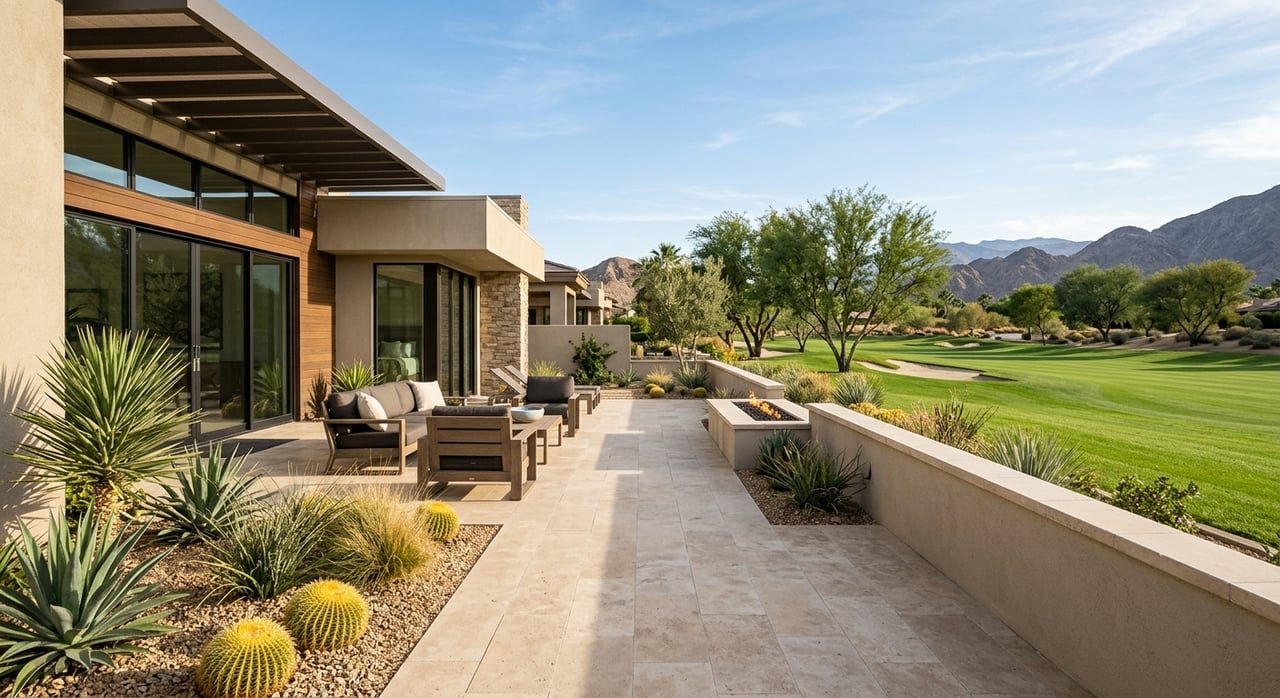
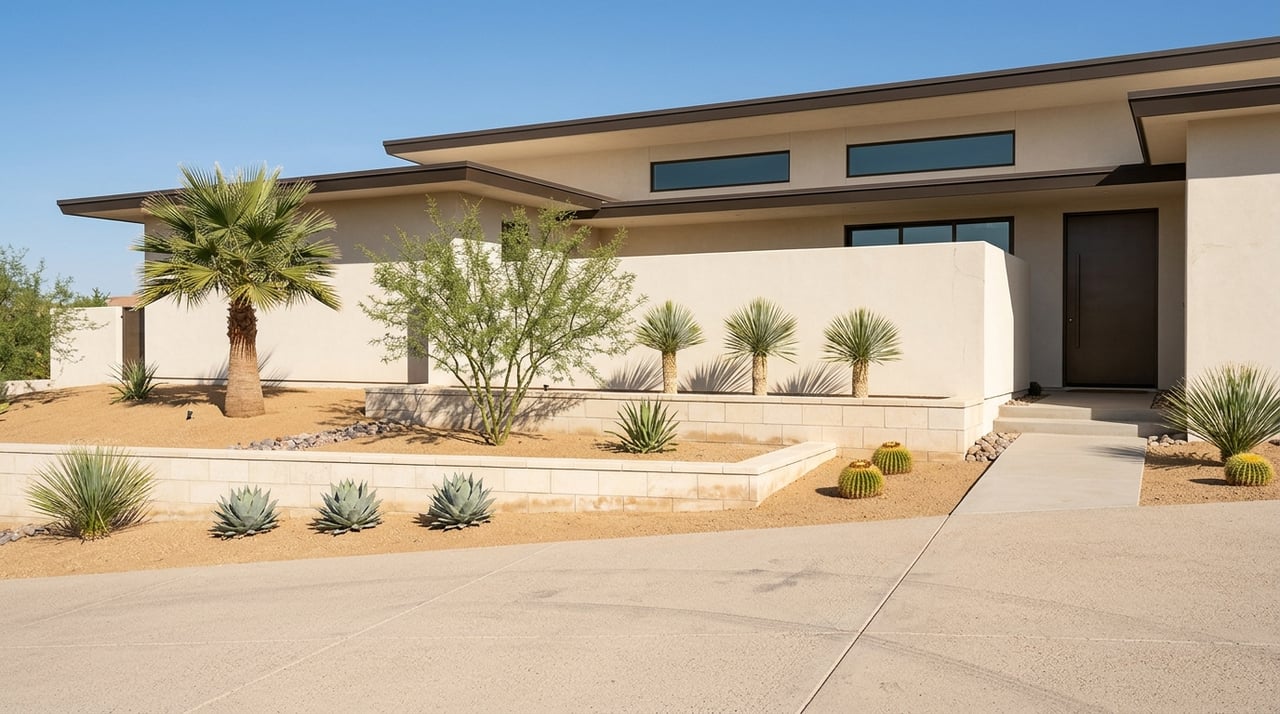
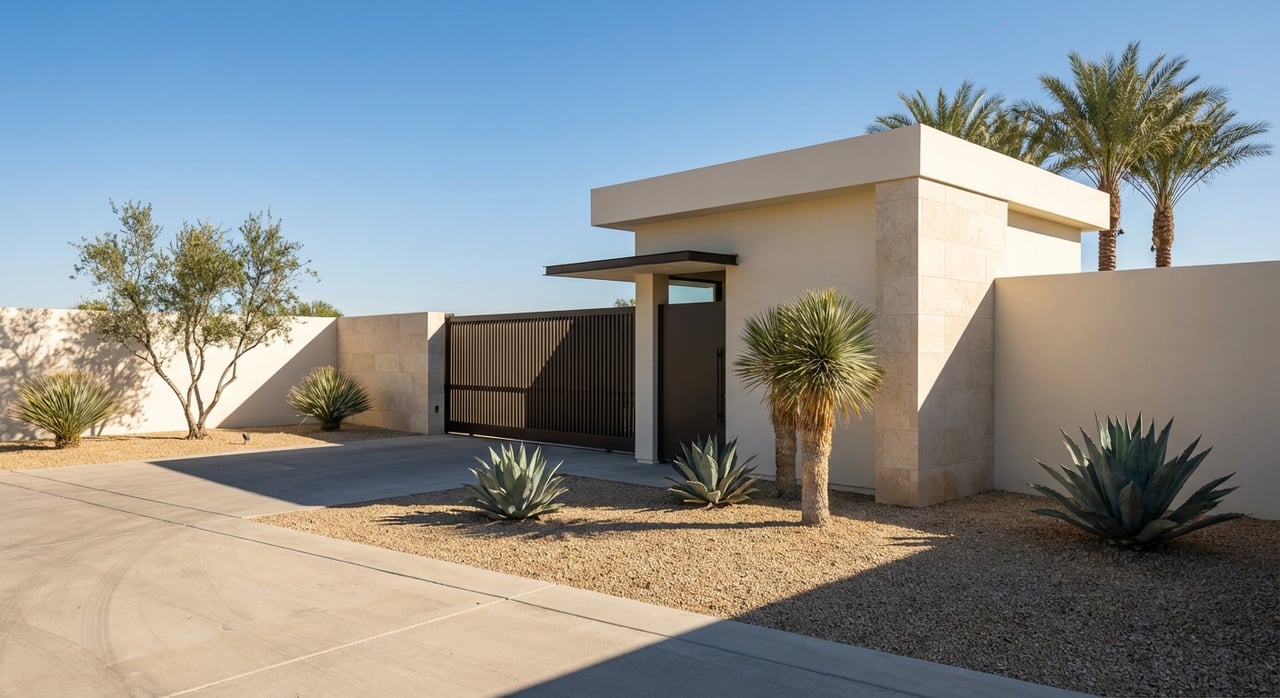
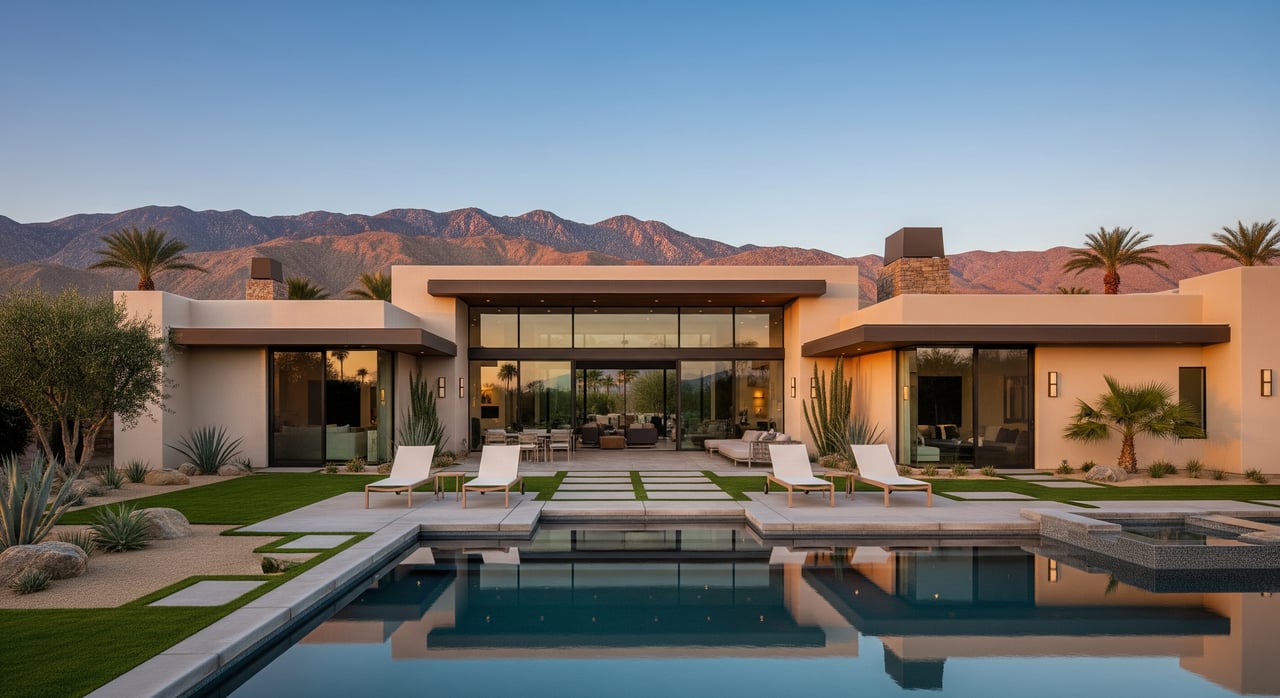
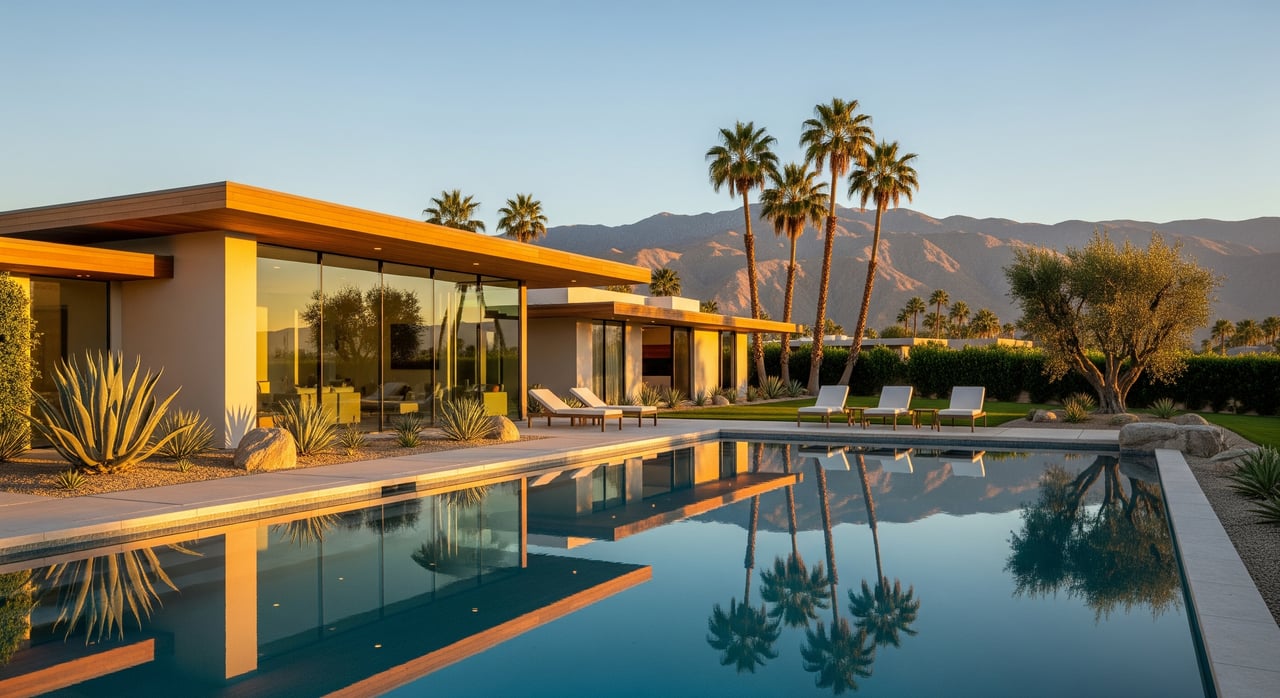
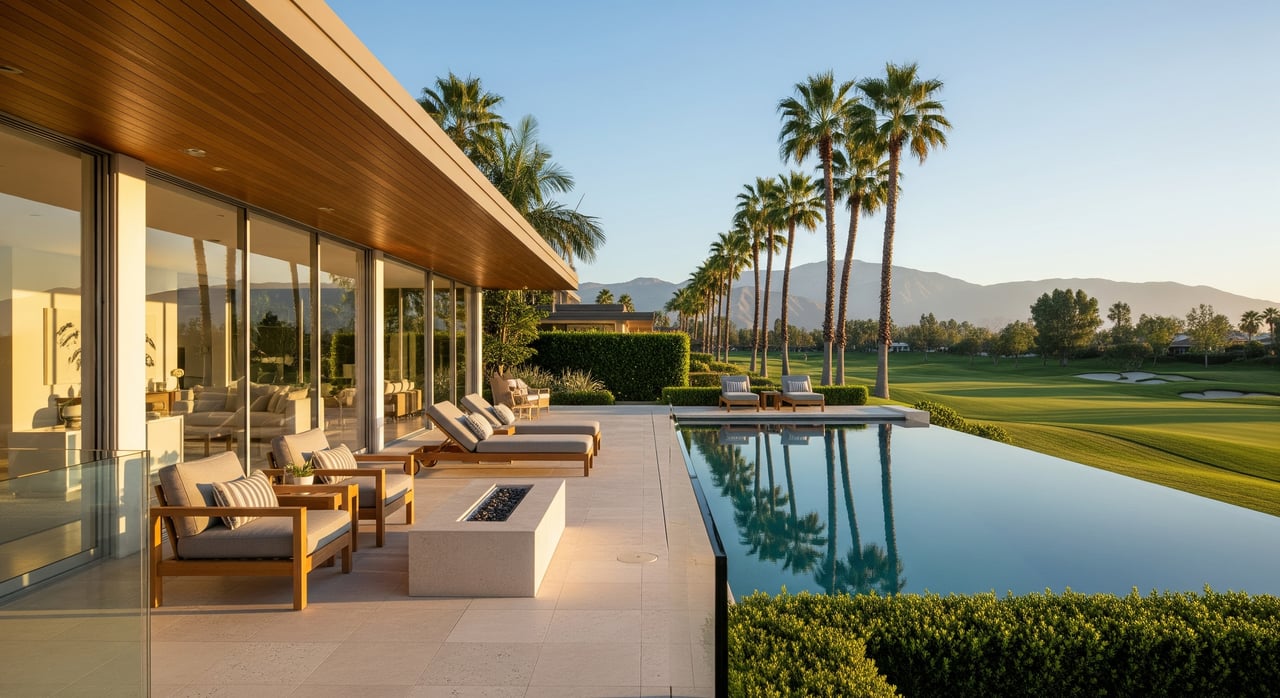
Thunderbird Heights has always sat right at this seam between the valley floor and the mountain. The guard-gated hillside community took shape in the 1950s and quickly became home to Frank Sinatra, Lucille Ball, and Gerald Ford, with homes designed by architects including Howard Lapham and William Cody set against the same foothills the trail climbs today. Residents still reach Thunderbird Country Club through a tunnel that runs underneath Highway 111, a detail almost nobody outside the neighborhood knows exists.
That tunnel and this trail system say the same thing about the neighborhood. Thunderbird Heights was built facing the mountain, not away from it, and the hills behind the gates were never just scenery. Right now, in the part of summer everyone else has written off, they are doing more than they get credit for.
If you are weighing what a home along this stretch of Frank Sinatra Drive is worth in today's market, The Downs Team can walk you through it with the same local read we bring to a trail map. Request a complimentary home valuation whenever you are ready to talk specifics.